
Ling - Language Learning
Ling Learn LanguagesEducation
4.61.30K Reviews
- Version
- 8.6.3
- Installs
- 1.00M
- Age Rating
- Everyone
Screenshots
Our Review of Ling - Language Learning
 Analysis by Appyee
I like language-learning apps best when they make it easy to build a habit without pretending that a short lesson will make me fluent. Language Learning with Ling is aimed at that useful middle ground: it turns practice into manageable sessions and gives learners a way to explore languages that can be harder to find in mainstream courses. I’d treat it as a friendly study companion, not a replacement for conversation or a complete course on its own.
That distinction matters when choosing a language app. Ling is an education app from Ling Learn Languages, and its reach is reflected in its 4.6 average from around 27,000 ratings and more than a million installs. It is free to download, with in-app purchases ranging from $0.99 to $349.99 per item, so I’d check what is included before building a long-term plan around paid content. The age rating is Everyone.
Why a broad language selection changes the experience
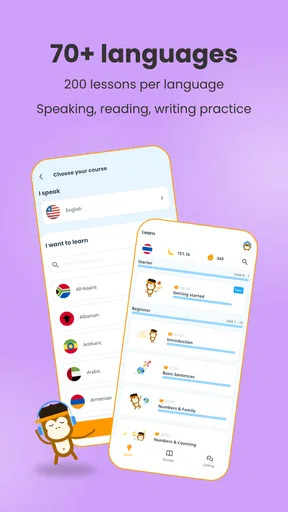
Ling’s strongest practical appeal is the range of languages it brings together. A learner interested in Tagalog, Thai, Cebuano, Khmer, or another less commonly taught option may have fewer convenient choices than someone studying Spanish or Japanese. Having a single app to explore those interests lowers the barrier to getting started, especially if you are still deciding which language you want to pursue.
That breadth is useful, but I would not assume that every language course will feel equally suited to every learner’s goals. Before committing, try a few introductory activities in your chosen language and ask whether the examples, explanations, and practice style match what you need. Someone learning phrases for an upcoming visit has different priorities from someone working toward confident reading or professional fluency.
Making short practice sessions count
The lesson format is best approached as a repeatable routine rather than a one-off cram session. I’d use a short break to review a small set of material, then return later to see what I can still recall without relying on prompts. That second pass is more revealing than simply completing several new exercises in a row: recognition can feel like mastery even when I cannot produce the word or phrase myself.
A useful habit is to keep a note outside the app of phrases you genuinely want to use. After a lesson, write down one expression and make up a personal example with it. If you are learning a language for travel, that could be a sentence you might need at a café or on public transport. This turns a quick in-app session into a small bridge between study and daily life, without assuming the app alone will supply every real-world conversation skill.
Where interactive practice helps—and where it stops
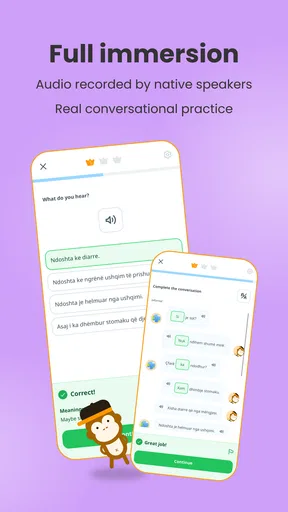
Interactive activities can make vocabulary less abstract than a plain list. A chat-style exercise gives a learner a reason to choose a response in context, while spoken practice can help you pay attention to sounds rather than silently recognizing written words. I find that combination more engaging than reviewing flashcards alone, particularly for beginners who need a gentle way to start forming answers.
Still, speaking to an app is not the same as speaking with a person. A prompted exercise usually gives you a narrower range of possible replies than an open conversation, and feedback from speech recognition should be treated as guidance rather than a final judgment on accent or clarity. If your goal is to handle fast, unpredictable conversation, pair app practice with a tutor, language exchange, or real conversations whenever you can.
A realistic way to fit Ling into a busy day
Imagine you are learning Thai before a trip and have a few minutes while waiting for a bus. You can use that pause for a focused lesson, then later try to recall one useful phrase without opening the app. At home, you might revisit the same material and say the phrase aloud at a natural pace. The point is not to turn every idle moment into study; it is to make practice easy enough to return to regularly.
For a more demanding routine, I’d alternate new lessons with review instead of always chasing the next unit. New content feels satisfying, but revisiting material exposes gaps before they become harder to fix. If a particular exercise keeps tripping you up, slow down and identify whether the problem is vocabulary, word order, or pronunciation. That small diagnosis makes the next session more useful than repeating the same activity automatically.
The Magic of Ling: A User-Friendly Experience
First things first, let's talk about the interface. The moment you open the app, you're greeted with a clean, intuitive design that makes navigation a breeze. No clutter, no confusion—just a straightforward path to language mastery. You can start with any language that catches your fancy, from Spanish to Korean, and everything in between.
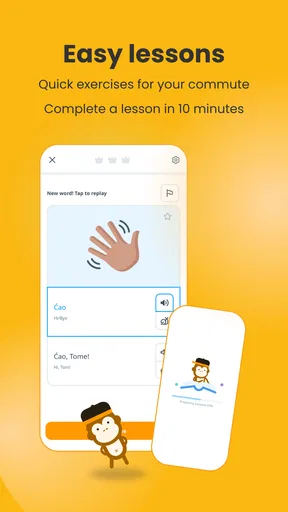
What's really cool is how Ling breaks down lessons into bite-sized chunks. Each lesson feels like a mini-victory rather than a giant hurdle. You're not just memorizing words; you're engaging with them through interactive exercises, quizzes, and real-world scenarios. This approach makes learning feel less like a chore and more like a game.
Interactive Lessons: More Than Just Words
One of the standout features is the interactive chatbox where you can practice conversation skills. It's like having a language partner who never gets tired of repeating phrases with you. The conversations are crafted to mimic real-life scenarios, so you’re not just reciting phrases—you’re learning how to communicate in context.
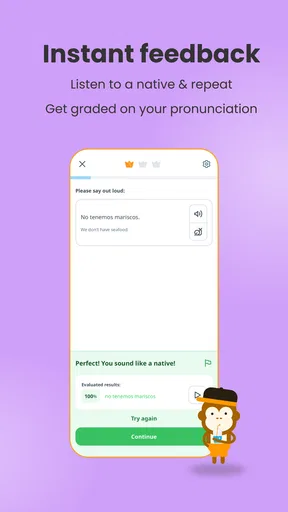
Plus, the app's speech recognition technology is surprisingly accurate. It listens to your pronunciation and gives you instant feedback, so you know exactly where you stand. You might even find yourself talking to your phone more than your friends!
Gamification: Learning Through Play
Let’s talk about motivation. We all know that learning a language requires dedication, and that’s where Ling’s gamification elements come into play. The app uses a mix of rewards, levels, and challenges to keep you engaged. Every time you complete a lesson, you earn points and unlock new levels. It’s like leveling up in a video game, but instead of slaying dragons, you’re conquering verbs and nouns.
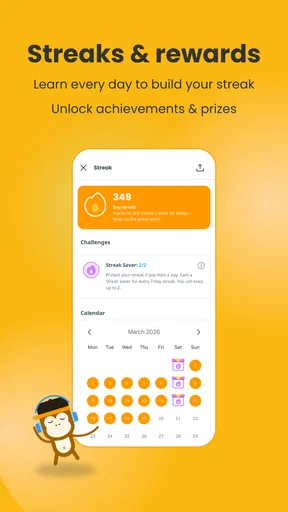
There are also daily goals and streaks that encourage consistent practice. Missing a day might make you feel a tiny pang of guilt, but it’s the good kind of guilt that pushes you to keep going. Trust me, once you start racking up those streaks, you won’t want to break them.
Customizable Learning Paths
Another feature worth mentioning is the customizable learning paths. You can tailor the lessons to fit your personal goals, whether you’re prepping for a trip, studying for a test, or just trying to impress someone special. The app adapts to your pace and progress, ensuring that you’re always challenged but never overwhelmed.
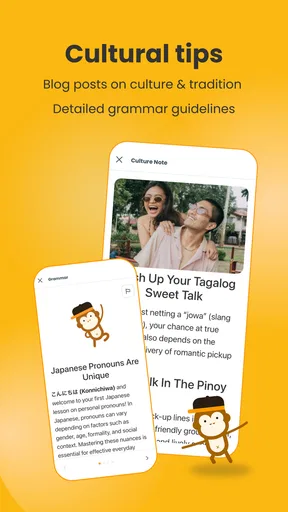
And if you ever get stuck, there are plenty of resources within the app to help you out, like grammar tips and cultural notes. It’s like having a mini language course right at your fingertips.
The Social Element: Learning Together
Learning a language doesn’t have to be a solitary journey. With Ling, you can connect with other learners, share tips, and even compete in language challenges. This social element adds an extra layer of motivation and makes the process a lot more fun. Plus, it’s always nice to know you’re not alone in the struggle to roll those Spanish R's.
There's also a community forum where you can ask questions and get advice from fellow language enthusiasts. Whether you need help with a tricky verb conjugation or just want to share your progress, the community is there to support you.
Choosing it over a textbook or a broader course
Compared with a textbook, Ling’s interactive approach is less static and easier to dip into when you have only a few minutes. A textbook may be better if you want a clear reference for grammar, a structured syllabus you can annotate, or an offline resource that does not depend on an app session. I see Ling as a way to get regular guided practice, while a book can fill in the deeper explanations and serve as a reference.
Compared with a general-purpose language course focused on a smaller set of popular languages, Ling’s breadth is a meaningful reason to look closer. The trade-off is that learners should judge the actual course they plan to follow rather than assuming the same depth or fit across the whole catalog. If you need formal exam preparation, extensive writing correction, or spontaneous conversation with people, choose a resource designed around those outcomes and use Ling as a supplement if its practice style suits you.
Who will get the most from it
I’d recommend trying Ling if you are a beginner, a casual learner returning after a break, or someone curious about a language that is not easy to find in every learning app. Its short activities and game-like progress can make the first steps less intimidating. It may also suit travelers who want to build a basic foundation before a trip, provided they add practical listening and speaking practice rather than relying on memorized prompts alone.
It is less suitable as a sole resource for advanced learners who already need nuanced feedback, extended reading, or unscripted conversation. It may also frustrate anyone who dislikes streaks, points, or frequent app prompts. If those mechanics feel like pressure instead of encouragement, a self-paced textbook or a tutor-led course may be a calmer fit. The best study tool is the one you can use consistently without resenting it.
Before paying for anything, I’d spend time with the free experience and decide whether the lesson style works for your target language. Check whether you enjoy the exercises, whether the explanations make sense to you, and whether the material connects to your reason for studying. The current version is 7.11.7, and the app has been available since November 25, 2018; it requires Android 7.0 or later. Those details help with compatibility, but the more important choice is whether the course meets your personal needs.
Final Thoughts: An App Worth Your Time
In a world full of language learning apps, Language Learning with Ling stands out for its engaging, user-friendly approach. It’s an app that doesn’t just teach you a language; it makes you love learning it. Whether you’re a complete beginner or looking to brush up on your skills, Ling has something to offer.
If you’re ready to embark on your language learning adventure, give Ling a try. It’s a small step for your phone, but a giant leap for your linguistic skills.
My more measured verdict is that Ling works best when I treat it as a practical starting point: a place to establish a routine, meet new vocabulary, and rehearse useful patterns. I would not count points or completed lessons as proof of fluency. Instead, I’d periodically test myself by recalling expressions without prompts and using them in a sentence of my own. That simple check helps keep progress honest.
For a free app with optional purchases, it is easy to explore before deciding whether it deserves a regular place in your study routine. Just keep your expectations tied to what app-based lessons do well: making practice accessible and repeatable. Add human conversation or a more specialized course when your goals demand it, and Ling can be a worthwhile part of a broader language-learning plan.
Verdict
Strengths of Ling - Language Learning
- Interactive lessons enhance engagement.
- Wide variety of languages available.
- User-friendly interface for easy navigation.
- Speech recognition aids pronunciation practice.
- Regular updates with new content.
Limitations of Ling - Language Learning
- Limited free content without subscription.
- Some exercises can feel repetitive.
- Occasional app crashes reported by users.
- Offline mode lacks full functionality.
- In-app ads can be intrusive.
Similar Picks in This Category
View All
Duolingo: Language Lessons
Duolingo4.7

Google Classroom
Google LLC2.8

Unacademy: Learn & Crack Exams
Unacademy3.2

Bible App for Kids
Life.Church4.4

Cake - Learn English & Korean
Cake Corp.4.7

Brainly: AI Homework Helper
Brainly4.5
Frequently Asked Questions
What platforms is Language Learning with Ling available on?
Language Learning with Ling is available on both Android and iOS platforms. You can download it from the Google Play Store for Android devices and the Apple App Store for iOS devices. The app is optimized for smartphones and tablets, ensuring a seamless learning experience across different screen sizes.
How does Language Learning with Ling help improve language skills?
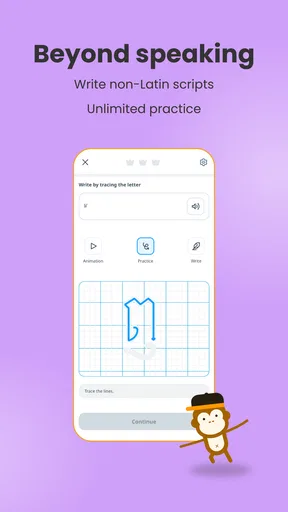
Language Learning with Ling uses interactive lessons to help users improve their language skills. The app includes speaking, listening, and writing exercises, along with real-life conversations. It uses gamification techniques to engage users, making learning both effective and enjoyable. The app covers vocabulary, grammar, and pronunciation to ensure comprehensive language acquisition.
Is there a free version of Language Learning with Ling?
Yes, Language Learning with Ling offers a free version with limited access to features. Users can explore basic lessons and exercises. However, to unlock advanced content, additional languages, and personalized learning paths, a premium subscription is available. The premium version provides an ad-free experience and access to all learning materials.
Can I use Language Learning with Ling offline?
Language Learning with Ling offers offline capabilities for premium users. Once you've downloaded the necessary lessons and materials, you can access them without an internet connection. This feature is particularly useful for learning on the go, allowing you to practice anywhere, anytime, without relying on data or Wi-Fi.
What languages can I learn with Language Learning with Ling?
Language Learning with Ling offers a wide range of languages to learn, including popular choices like Spanish, French, German, Chinese, and Japanese, among many others. The app continually updates its language offerings, so users can expect new languages to be added over time, catering to diverse learning interests and goals.
